Notes on the Notes – August 10, 2025

This week’s music:
“Are You a Shepherd” (MV #126)
“Are you a shepherd, good shepherd who leads us
safely through danger, while calming our fears?
Are you a father who shelters and feeds us,
shares in our laughter and wipes away tears?
Yes, you are shepherd, parent and teacher,
but you are greater than all that we know.
Holy and living, loving and giving,
God, you are with us wherever we go.
Are you a mother, good mother who bears us,
comforts, protects us and helps us to rest?
Are you a teacher who daily prepares us,
challenging students to offer their best?
Great, gentle shepherd, forever beside us,
lead all your children in paths that are right.
Great, loving parent, wise teacher, you guide us.
We want to love you and bring you delight.”
This hymn was written by Ruth Duck in 2002, with music by William P. Rowan. Through her words, Ruth explores the ways we understand our relationship with God.
“Trust These Words” (TLUS #78)
“Trust these words: you are forgiven!
Through Christ’s mercy, broken hearts can be restored;
Trust these words: you are forgiven!
Live in peace, beloved, know you are adored;
Trust these words, trust these words, trust these words.
Trust these words: we are forgiven!
Through God’s mercy broken lives can be restored;
Trust these words: we are forgiven1
Live in grace and peace, oh, love and serve the Lord;
Trust these words, trust these words, trust these words.
Trust these words.”
Our response to the Words of Assurance for the month of August was written by Lisa Waites (2021).
“Saviour, Like a Shepherd Lead Us” (SFGP #93, The Hymnary #434)
“Saviour, like a shepherd lead us,
Much we need your tender care;
In your pleasant pastures feed us,
For our use your folds prepare.
Blessed Jesus, gentle shepherd,
You have saved us, yours we are.
We are yours, in mercy tend us,
Be the guardian of our way;
Keep from ill, from sin defend us,
Seek us when we go astray.
Blessed Jesus, gentle shepherd,
Hear your children when we pray!
You have promised to receive us,
Poor and sinful tho’ we be;
You have mercy to relieve us,
Grace to cleanse and power to free.
Blessed Jesus, gentle shepherd,
Early let us turn to you.
Early let us seek your favour,
Early let us do your will;
Blessed Lord and only Saviour,
With your love our spirits fill.
Blessed Jesus, gentle shepherd,
You have loved us, love us still.”
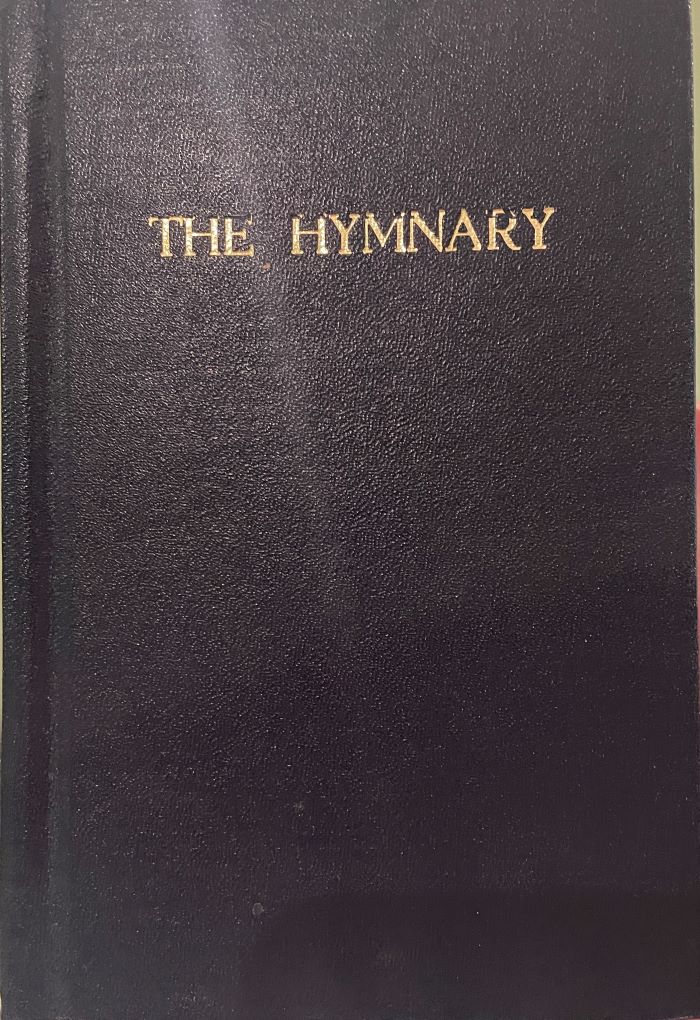
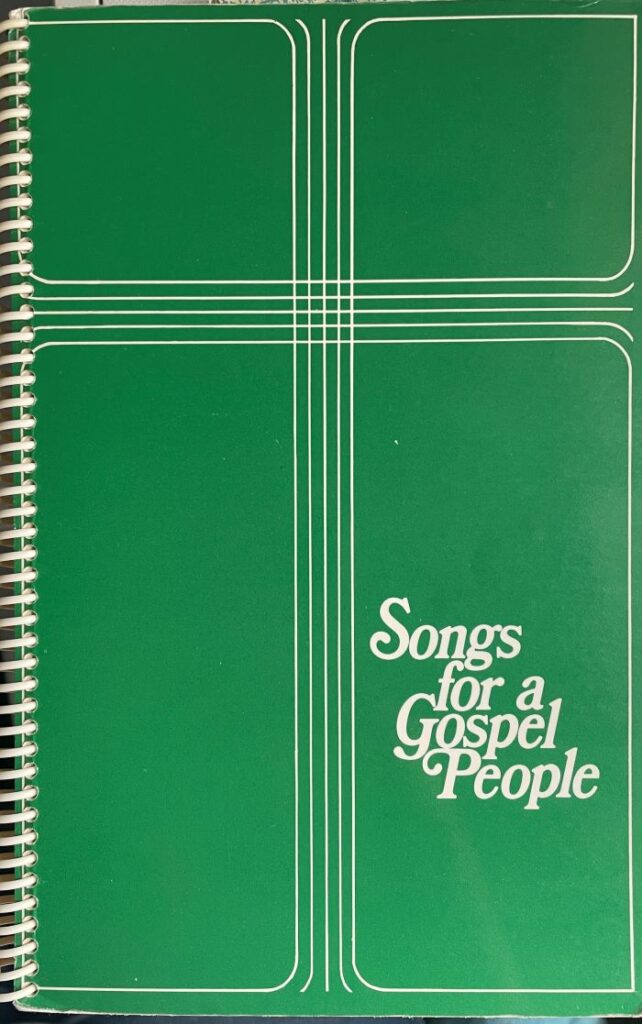
This hymn follows the metaphor of Jesus as the Good Shepherd, as described in the gospel. The words come from “Hymns for the Young,” published in 1836. The music is by William L. Viner (1790-1867). The hymn first appeared in The Hymnary and then later in the hymn book supplement Songs for a Gospel People. While it was not included in The Hymn Book or Voices United, it remains a well-loved hymn for many people.
“I Saw the Rich Ones” (MV #127)
“I saw the rich ones, I saw what they gave; the widow who offered two pennies she’d saved;
and I saw she was smiling and I knew she was glad; and I wondered because she gave all that she had…
But with God the world is turned upside down; the poor are embraced and the lost they are found.
Let’s work for a world where all people are free; where it’s good to feel good about God loving you and me.
I saw Zaccheus, a sinner they said, but to his house I saw Jesus go to break bread;
and I knew something special had happened that day when Zaccheus gave half of his riches away…
The men in the vineyards were grumbling one day; I knew they weren’t happy with what they’d been paid;
for the ones who came later were paid just the same as the workers who greeted the dawn when they came… “
This hymn was written by Pat Mayberry in 2000. It references three gospel stories where we see God turning the world “upside down.” They are: Luke 21:1-4 (the widow’s mite), Luke 19:1-10 (the story of Zaccheus) and Matthew 20:1-16 (the parable of the workers in the vineyard). Each of these parables is a commentary on what we have versus what we need.
Hear musicians at Transcona United sing the hymn at: I Saw the Rich Ones (MV 127)
“There’s Enough for All” (TLUS #60)
“There’s enough for all if we would learn to share it,
There’s enough for all, oh, help us to believe.
There’s enough for all.
Let’s bring our loaves and fishes, and offer them to Jesus.
There’s more than enough for you and me.”
Our offering response for the month of August was written by Bryan Moyer Suderman (2024).
“He Leadeth Me” (VU #657, The Hymnary #483)
“He leadeth me; O blessed thought!
O words with heavenly comfort fraught!
Whate’er I do, where’er I be, still ’tis God’s hand that leadeth me.
Sometimes ‘mid scenes of deepest gloom,
Sometimes where Eden’s bowers bloom,
By waters calm, o’er troubled sea,
Still ’tis his hand that leadeth me…
Lord, I would clasp thy hand in mine,
Nor ever murmur nor repine,
Content, whatever lot I see,
Since ’tis my God that leadeth me…
And when my task on earth is done,
When by thy grace the victory’s won,
Even death’s cold wave I will not flee,
Since God through Jordan leadeth me…
He leadeth me! He leadeth me!
By his own hand he leadeth me!
His faithful follower I would be,
For by his hand he leadeth me!
Our closing hymn was written by Joseph Henry Gilmore (1862), with music by William Batchelder Bradbury (1864). Gilmore started his text based on Psalm 23; specifically verse 2, “he leadeth me beside the still waters.” It was written in Philadelphia in March, 1862, during the American Civil War. His wife submitted the poem to the Boston journal, Watchman and Reflector, where William B. Bradbury saw it. Bradbury adapted the hymn text to a verse and refrain structure and published his setting in Golden Censer (1864). Gilmore discovered his hymn in a new gospel songbook while visiting another city, and was quite amazed at its growing popularity.
Gilmore provided further information on the historical context of this hymn:
It was the darkest hour of the Civil War. I did not refer to that fact—that is, I don’t think I did—but it may subconsciously have led me to realize that God’s leadership is the one significant fact in human experience, that it makes no difference how we are led, or whither we are led, so long as we are sure God is leading us.
Stanza 2 of the hymn may suggest the ethos of the national crisis. Drawing on Psalm 23:4a; “Yea, though I walk through the valley of the shadow of death, I will fear no evil” (KJV), Gilmore begins: “Sometimes mid scenes of deepest gloom…”
In stanza 3, the poet offers a particular theological interpretation of Psalm 23:4b: ”thy rod and thy staff they comfort me.” In doing so, he reflects on the concept of complete submission to God’s will found in many gospel songs of this era.
Psalm 23:6, “Surely goodness and mercy shall follow me all the days of my life: and I will dwell in the house of the LORD forever” (KJV), provides a basis for the final stanza of the hymn, drawing upon the familiar image of the Jordan River cited throughout Scripture, especially as the place of Jesus’ baptism (Matthew 2:13) and a place where Jesus often conducted his ministry (Matthew 4:25; Mark 3:7-8), and ultimately the passageway from this life to the next.
As is the case with so many gospel songs, the rhetorical strength of this hymn lies in the almost incessant repetition of a single thought: “He/God leadeth me.” When the five quotations of this idea in the four stanzas are added to the three references in the refrain, the singer will have sung “He/God leadeth me” a total of seventeen times by the time the hymn is concluded!
(Source: https://www.umcdiscipleship.org/resources/history-of-hymns-he-leadeth-me-o-blessed-thought)
While the hymn first appeared in The Hymnary of the United Church of Canada, it was left out of subsequent hymn books and supplements until it reappeared in Voices United.
Sing along with the London Fox Singers at: https://www.youtube.com/watch?v=oAcgX3Aqo9g
“May the Peace of Christ” (TLUS #104)
“May the peace of Christ be with you.
May the love of God dwell deep in your heart.
May the Spirit enlighten your way.
May you walk in the comfort of God’s care.”
Our benediction response for the month of August was written by Izumi Shiota in Japanese. The English paraphrase we will be using today is by Lori True.
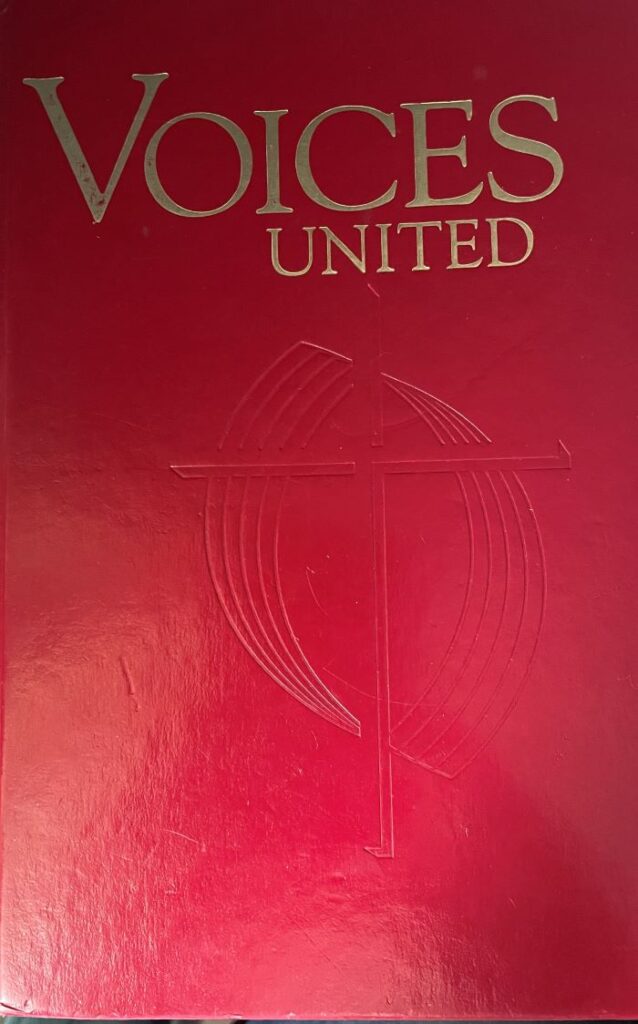
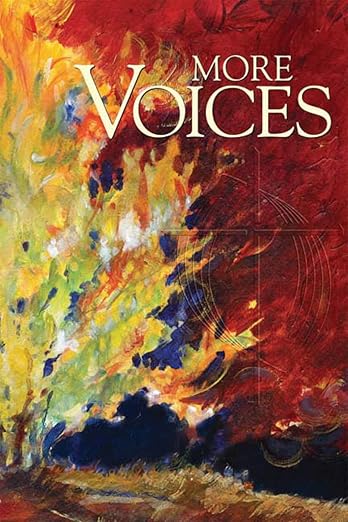
?? What does TLUS mean? TLUS is short for “Then Let Us Sing,” the new worship resource published by the United Church of Canada. This resource adds new music for the 21st century. At WPUC, we will be using it in addition to “Voices United” and “More Voices.”